University of California Press · 2023
Local Knowledge and Vulnerability in Oceania
Purchase
About the Book
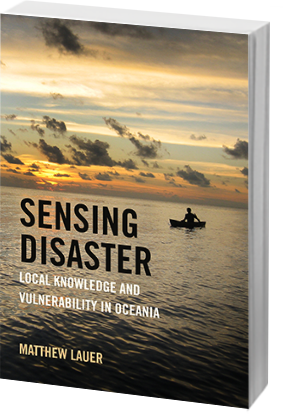
Published by the University of California Press in 2023, Sensing Disaster presents the results of long-term ethnographic research on Simbo Island following the devastating 2007 Solomon Islands earthquake and tsunami. The book examines how residents understood, experienced, and responded to the disaster — and what their responses reveal about the nature of vulnerability, resilience, and local ecological knowledge in Oceania.
Drawing on extended fieldwork that spans the pre-disaster period, the immediate aftermath, and the longer-term recovery, the book argues that local knowledge systems are neither simply protective nor simply constraining in the face of environmental hazard. Instead, they are dynamic, contested, and deeply embedded in the social and political structures of island communities.
The book makes an important contribution to the anthropology of disaster and natural hazards, Pacific studies, and the study of local knowledge, offering a nuanced account of how small island communities navigate catastrophic environmental change.
Endorsements
“Matthew Lauer critically examines many key concepts within Indigenous ecological knowledge and disaster research and demonstrates the problematic assumptions built into them. Rather than just offer a critique, however, he also directs readers forward to resolve inadequacies in the current interpretation of these fields.”
“Sensing Disaster deftly argues for reconsidering Indigenous disaster responses. Lauer’s rich ethnographic work leads away from assumptions about what Indigenous ecological knowledge is and toward a richer understanding of local knowledges as situated practices that involve people, places, and nonhuman others. An important and timely intervention into Indigenous knowledge literature that urges us to more fully examine the interconnections among disaster, vulnerability, and changing environments.”
“At a time when natural disasters are increasing worldwide, Lauer’s timely and extremely pertinent book argues that all knowledges, Indigenous and otherwise, are essential to understanding risk and calamity — and that facile acknowledgments of Indigenous ecological knowledge actually advance outside interpretative control. Asserting that the labels ‘local’ and ‘situational’ are more accurate descriptors of ecological recognition, he in fact suggests the term ‘Indigenous’ be expunged.”